
 The wiper motor in the S2 is a Lucas Type 15W motor, the output of which drives a connecting rod to the triple wiper rack. From what I can tell the 15W motor essentially works in the same manner as the DL3 wiper motors used in the earlier cars, except that the parking switch is now internal within the 15W.
There are two main sections of the wiper motor; a round bodied section (which acts as the yoke, completing the magnetic circuit) and the motor gearbox. The round bodied section has two permanent field magnets attached to its inner wall and houses the motor’s armature. At the end of the armature shaft is a worm drive that drives the geared output shaft in the motor gearbox.
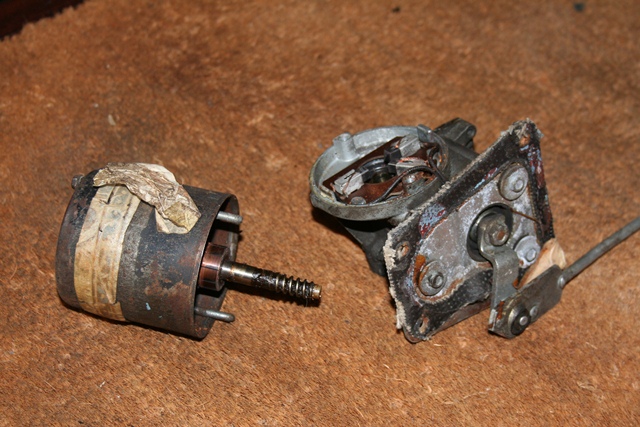 The two long yoke retaining bolts were removed which enabled the round bodied section and armature to be carefully withdrawn until the worm drive is free. Unchecked, the action of the worm drive would pull the armature shaft further into the motor gearbox. A threaded stop screw limits the permitted travel of the armature shaft and there’s also flat thrust washer between the armature and motor gearbox.
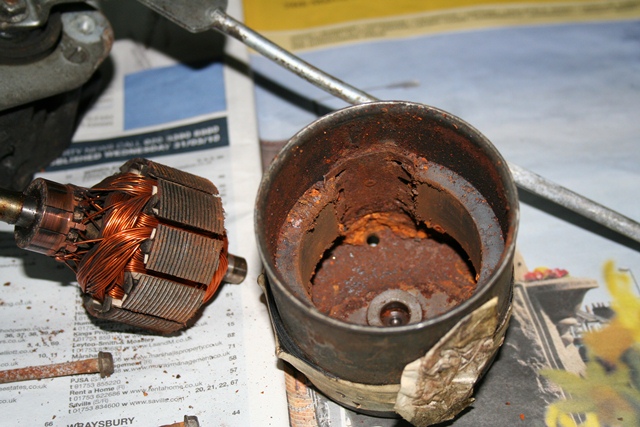 The armature can then be withdrawn from the yoke. Although a reasonable amount of force is required to overcome the magnetic attraction between the permanent magnets and the armature.
The interior of the yoke was fairly heavily rusted and all the tiny, loose rust particles were now annoyingly attached to the permanent magnets.
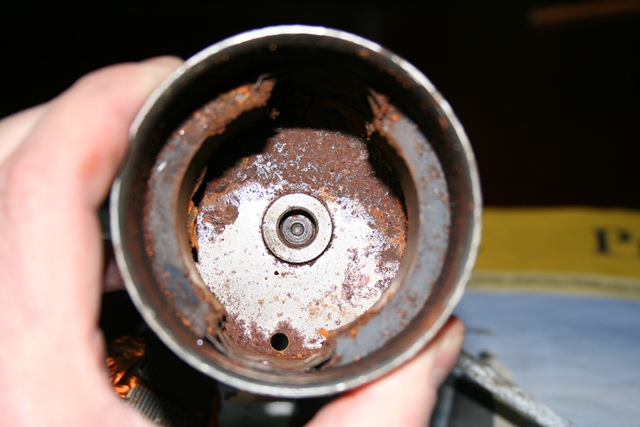 The end of the armature rotates in, what the manual describes as, a bearing housing in the cap of the yoke. However there isn’t a bearing as such. Only a small thrust plate and fibrous washer. I didn’t realise they were there at the time of dismantling so I was lucky not to lose them.
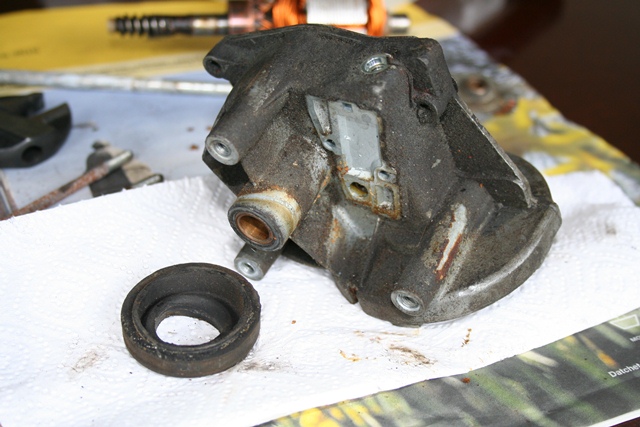
A cover on the main motor housing provides access to the geared output drive. Sometime in the past this cover had become deformed and so it no longer provided a tight seal around its full perimeter (just about visible in the lower photo to the right).
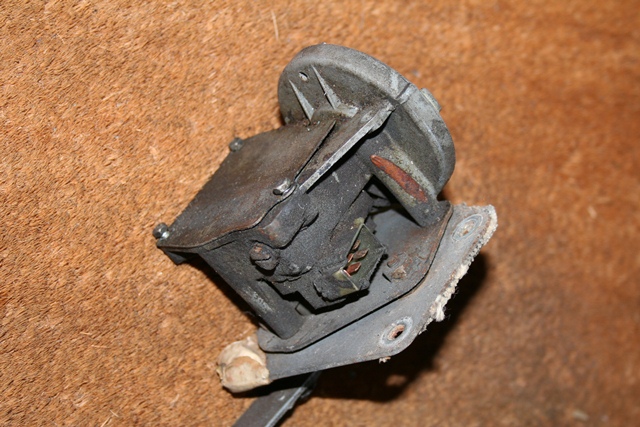 The cover can be pressed back into shape but it immediately pops back, in a similar manner to the lid of an opened jar. I think it’s referred as oil canning and is a result of the centre area of the lid having been stretched.
It should be possible to reverse the stretching by heat shrinking the centre of the plate but that will have to wait until the rebuild.
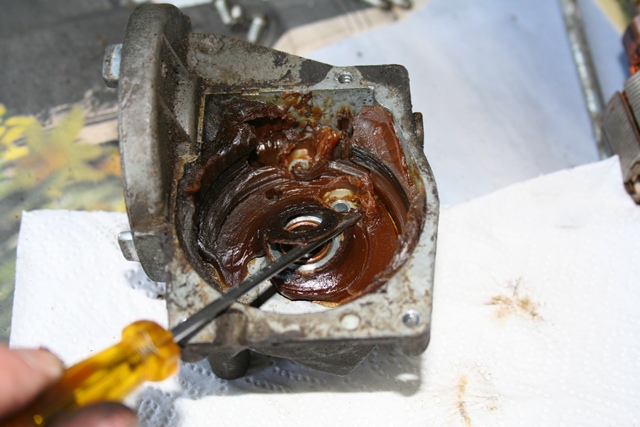
Removing the cover revealed copious amounts of thick brown grease. I think the grease had dried out long ago and it was surprising the motor was able to turn at all! The rest of the dismantling was very straight forward.
| Hardened grease within | Worm drive engaged | Triple armature brushes |
|---|---|---|
|
|
|
|


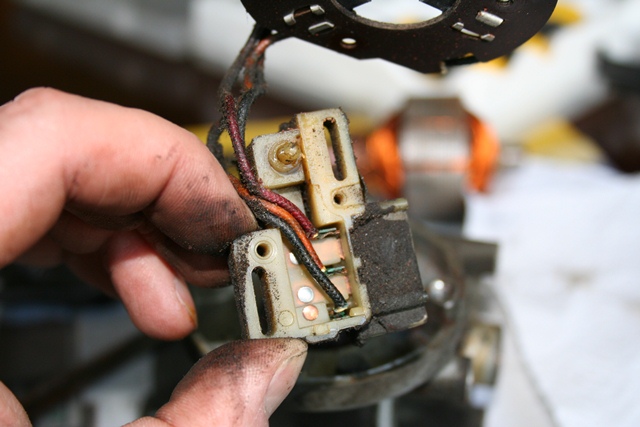
As the wiring between the armature brushes and the parking switch unit is fixed, they had to be removed together. This required the removal of the geared output shaft to gain access to the screws securing the parking switch unit. The output rotary link is removed which enabled the geared output shaft to be withdrawn.
| Output rotary link | Geared output shaft | Parking switch screws |
|---|---|---|
|
|
|
|
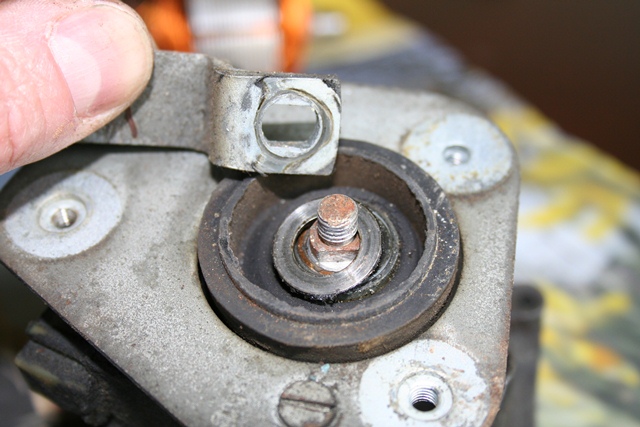

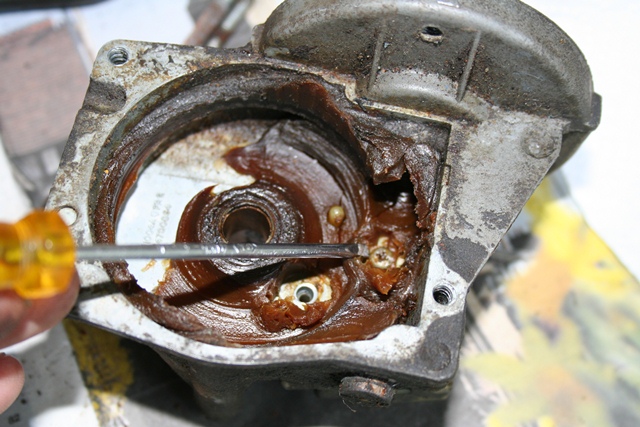
The geared output shaft has a Belleville washer (conical spring washer) inside the motor gearbox to provide pre-loading and a flat washer between the motor gearbox and the rotary link.
| Parking switch wiring | Belleville washer | Rear rubber seal |
|---|---|---|
|
|
|
|
Sorry, the comment form is closed at this time.