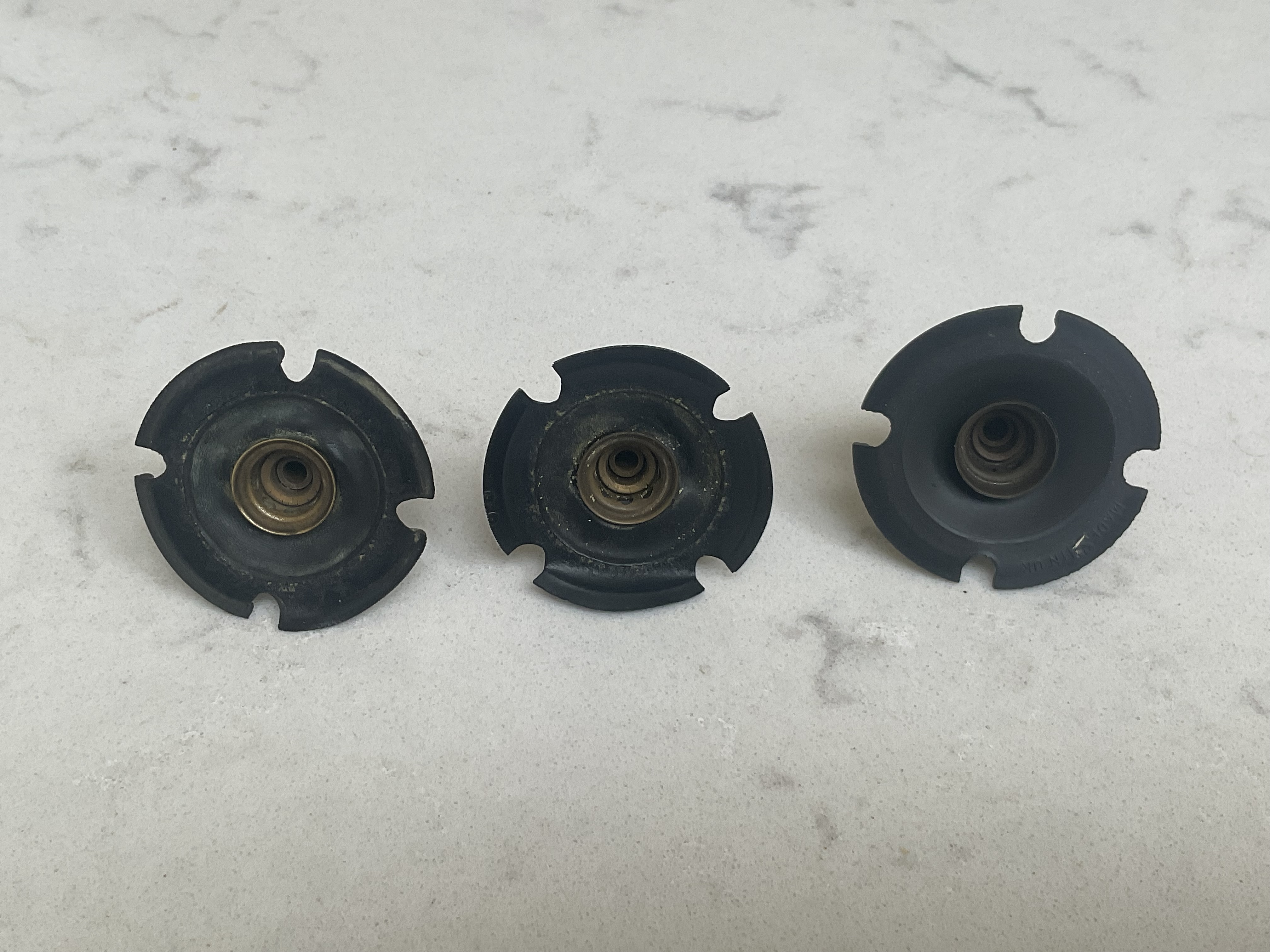
No sooner had I got the car running better than it had ever run before, another carburettor related problem arose. I was getting the car out for a blast around the local country lanes when I heard the sound of liquid pouring from underneath the engine – one or more of the carburettor float chambers were overflowing.
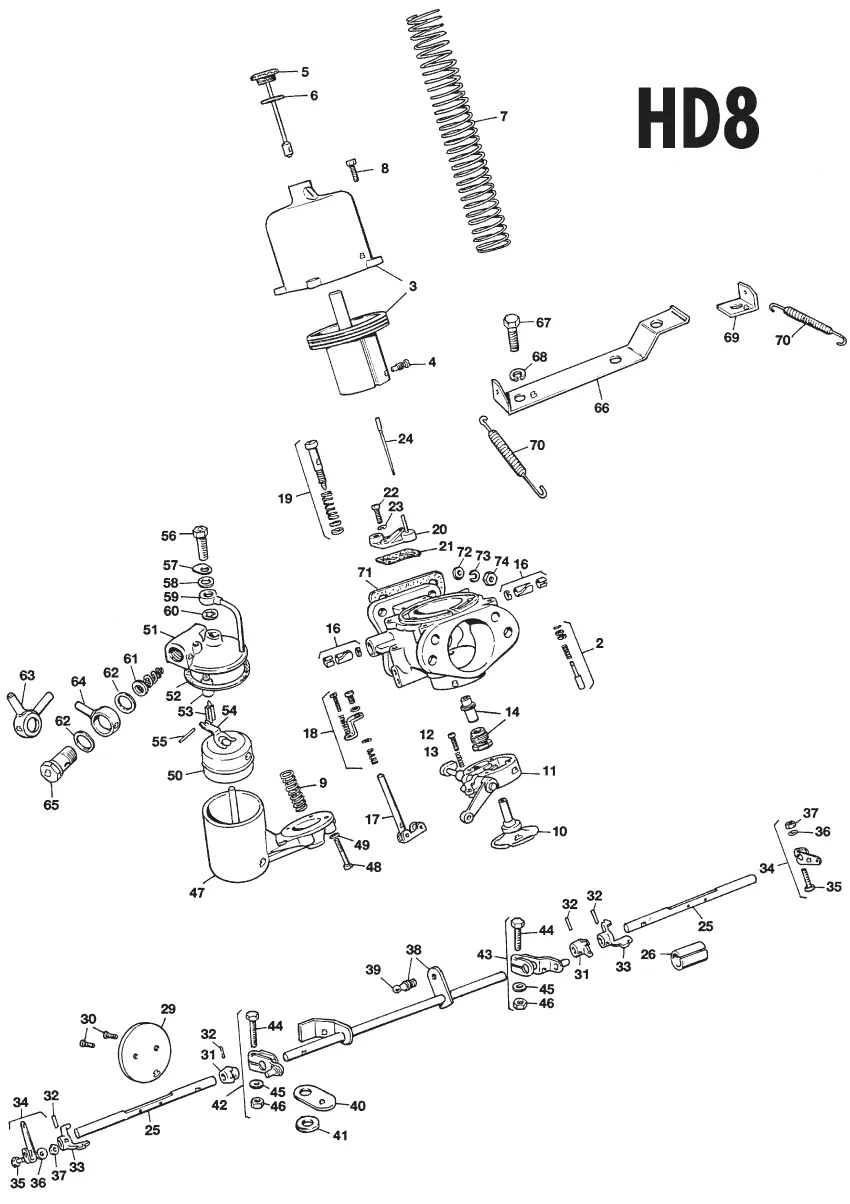
Schematic diagram of the SU HD8 Carburettor.
I’d had this issue several years ago and it is generally caused by one of the following:
- a sticking float needle caused by debris or build up of fuel gum or ‘varnish’ in the needle seat housing (53)
- incorrect heights of the float levers (54) operating the float needles
- a sunken float (50)
In light of the ethanol fuel issues, you could add the deterioration of the float needle’s vulcanised tip to the list.
I had previously checked and adjusted the height of the float levers so it all pointed to some sort of issues with the operation of the float needles. The height of the float levers can be set by simply turning the lid upside down so the lever is holding the float needle in the closed position. The correct height should allow a 7/16” (or 11mm) bar to be inserted so the float levers forks are just touching the bar. Any adjustments can be made by bending the lever.
Setting the float lever height 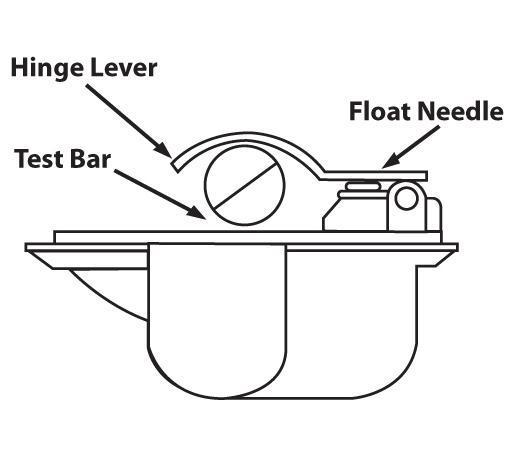
All three lids were removed allowing a visual check for the buoyancy of the floats and the lever heights re-checked. All was as expected so the float levers were then removed by withdrawing the pin hinge to enable the needles to be removed.
The front carburettor’s lid disassembled revealed a broken needle tip
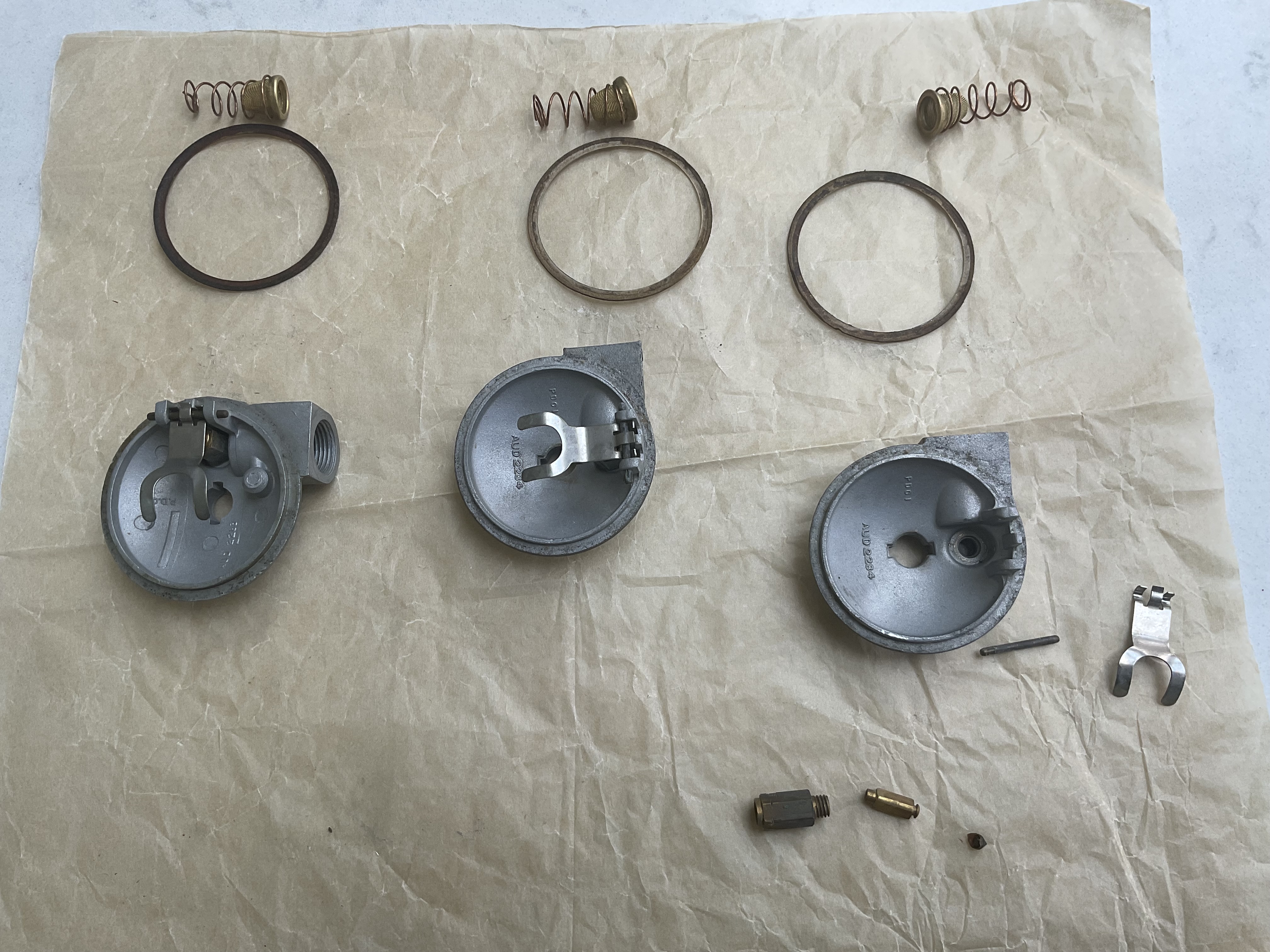
The vulcanised tip of the front carburettor’s needle was only partially attached. It looked like at some stage in the past it had been glued back in place and during the inspection just fell off. Again this could have been a result of having ethanol in the fuel which has degraded the tip over time. The other two needles looked fine and so were retained (a poor decision!).
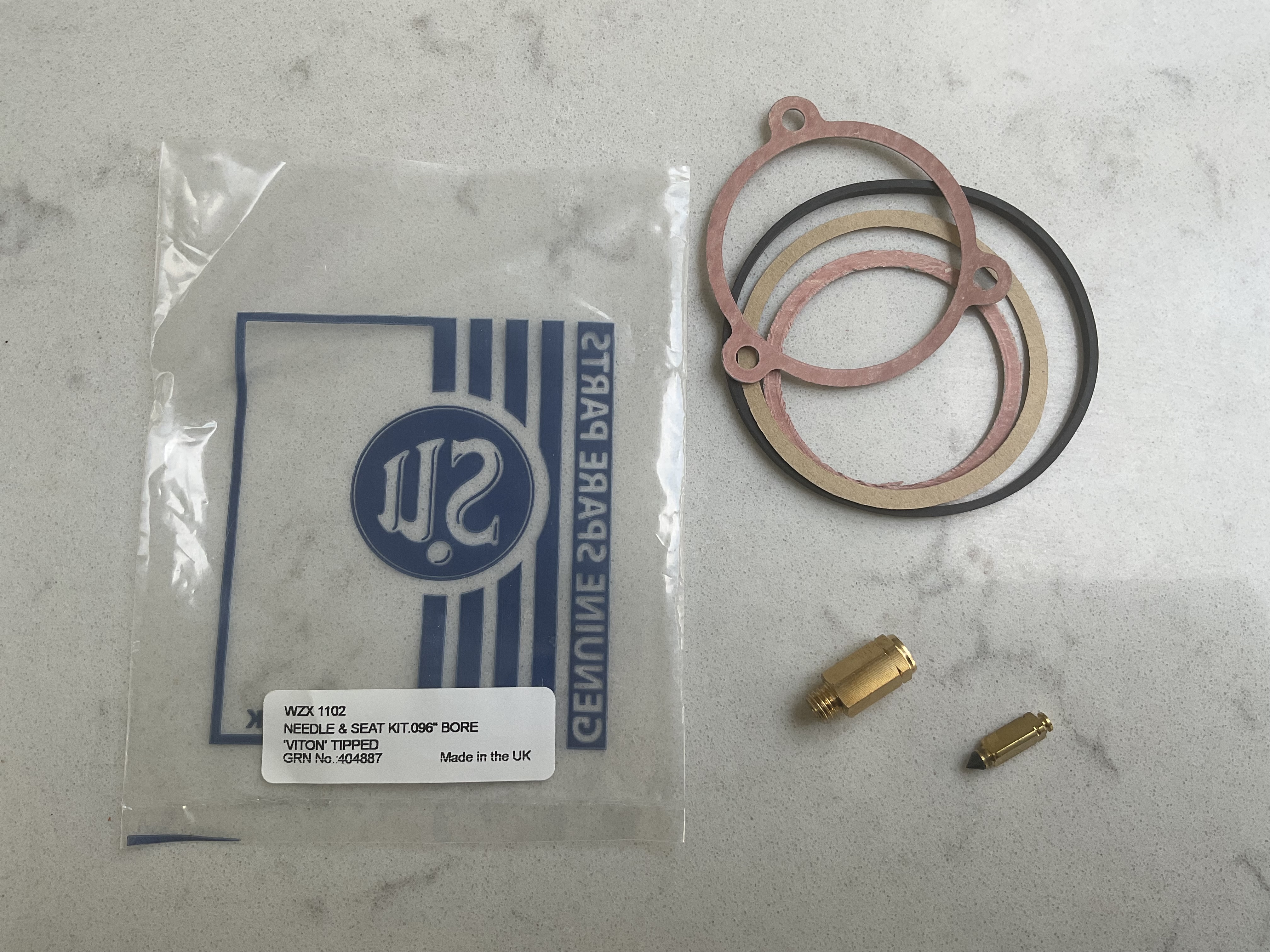
A new needle and seat housing arrived from Burlen Fuels a few days later. The replacement needles now have a Viton tip which isn’t affected by ethanol.
Replacement needle kits now have a Viton tipped needle to overcome ethanol problems
The three lids were refitted back on the car and the ignition key turned to switch on the fuel pump to check everything was now resolved. It is an understatement to say that the now familiar sound of fuel pouring from underneath was a disappointment!
One problem is the ends for the overflow pipes are hidden away next to the oil filter. They’re only clearly visible from beneath the car so it is tricky to diagnose which carburettor is at fault and then get back into the car to turn off the ignition before too much fuel has been discharged.
In the end I had to remove the air filter so I could position a mobile to video the overflow pipes while operating the ignition from within the car. The results were very conclusive – it was the middle carburettor that had the issue …..
If you’re going to do a job, do it once and do it properly! I think it was an eagerness to get the car back up and running that I’d taken shortcuts and had assumed the broken tip of the front carb was the only issue.
Also if the ethanol fuel had been the cause of the issue then it was only a matter of time before the other two would fail. So a false economy only replacing one. Therefore two more needle kits were purchased so it shouldn’t be an issue in future.
I’ve now also taken to using Ethomix Ethanol Corrosion Inhibitor Additive (E5/E10 Fuel Protection) and VSPe Power Plus Fuel Additive whenever I fill up the tank.